

FAQ on Stone Veneer
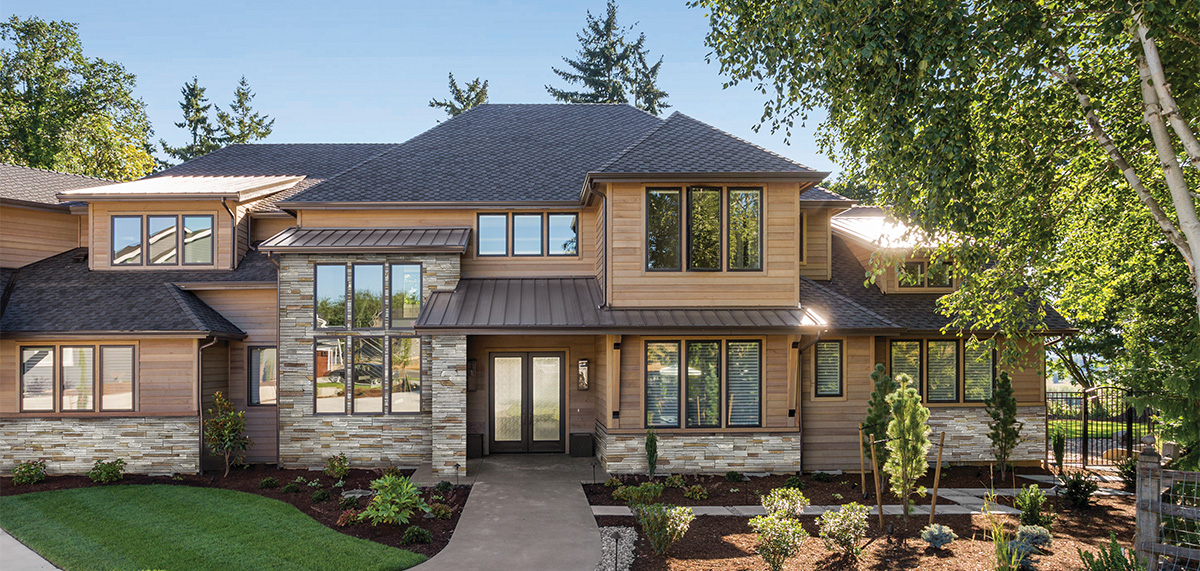
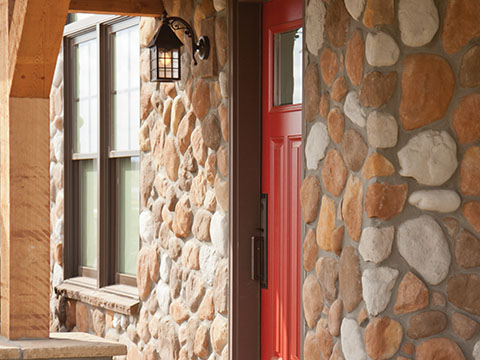
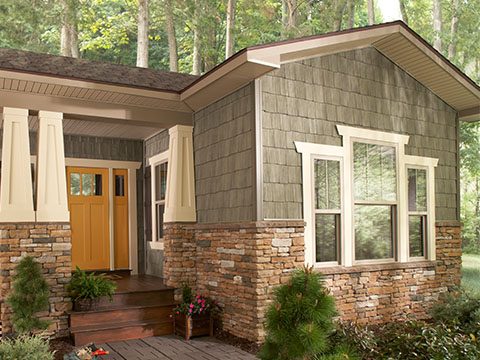
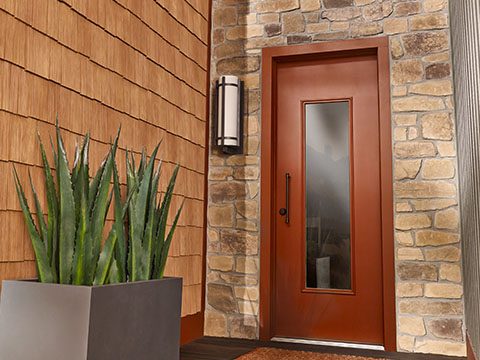
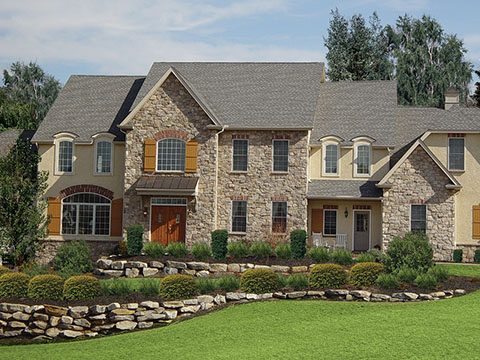
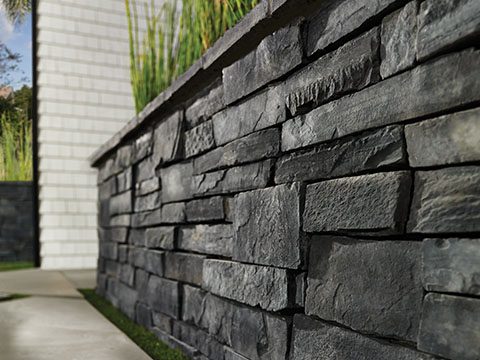
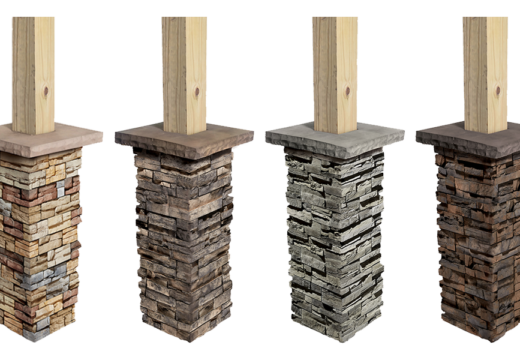
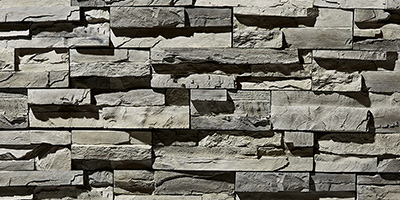
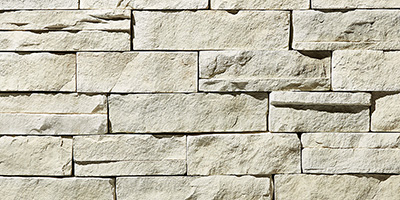
Ply Gem Stone profiles are designed using casts made from molds of real stone. Our process creates a final product that is lighter in weight than natural stone. Also, installation of natural stone often requires wall ties or footings, which often makes the process more costly and difficult.
What are the benefits of using Ply Gem Stone?
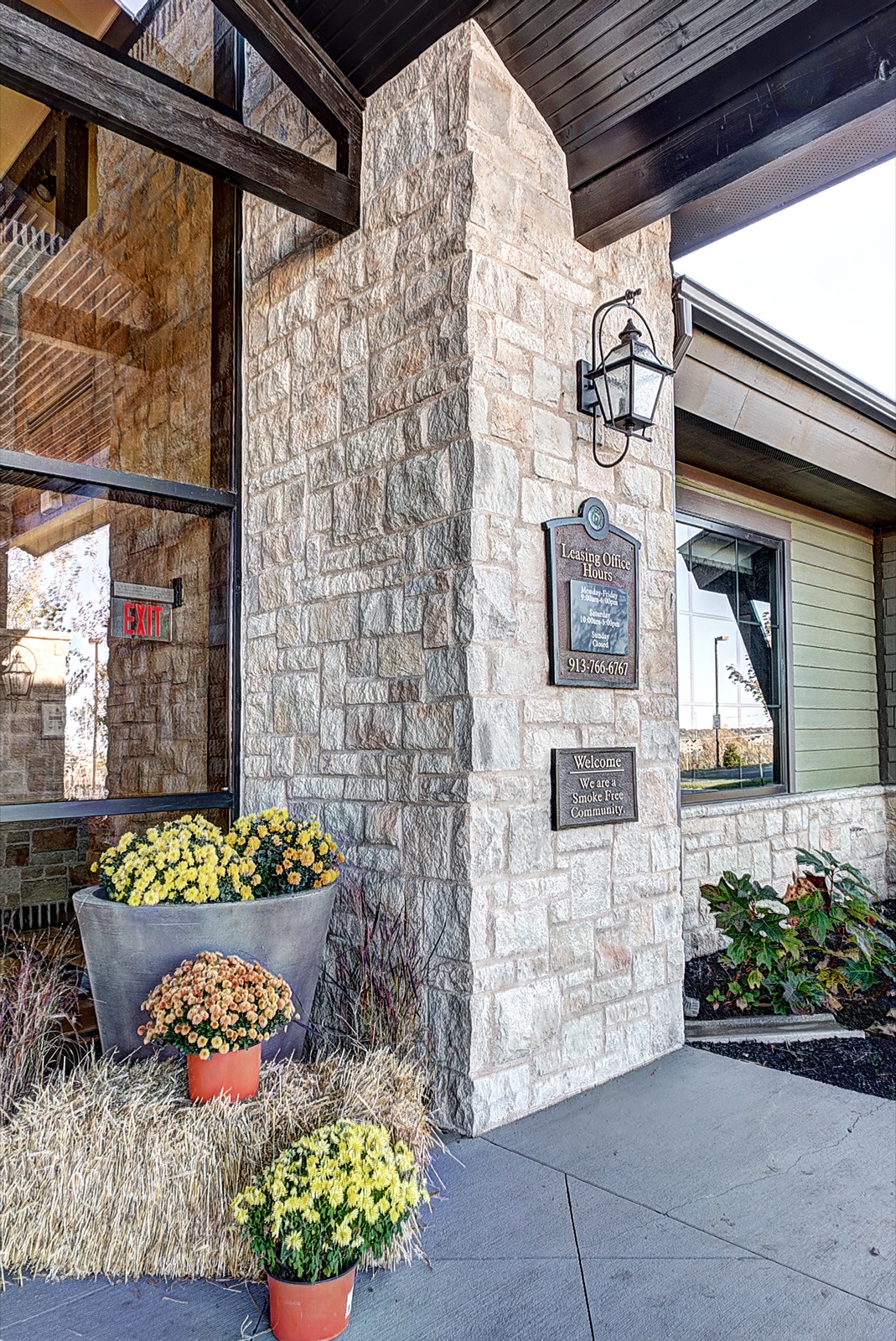
There are many benefits to using Ply Gem Stone for your next project. It adds beauty and curb appeal to any space, and enhances your architectural design. In addition, manufactured stone is about one-third to one-half the cost of natural stone, easier to transport and install.
How is Ply Gem Stone sold?
Ply Gem Stone is sold through a network of masonry and building products dealers to installers. In addition, Ply Gem Stone is available in a variety of retail locations such as stone yards and lumberyards across the country. Most styles are sold in boxes of 10 square feet of coverage with a half inch mortar joint. Drystack applications will yield 8.5 square feet of coverage. True Stack cartons cover 10 square feet with no mortar joint.
Where can Ply Gem Stone be installed?
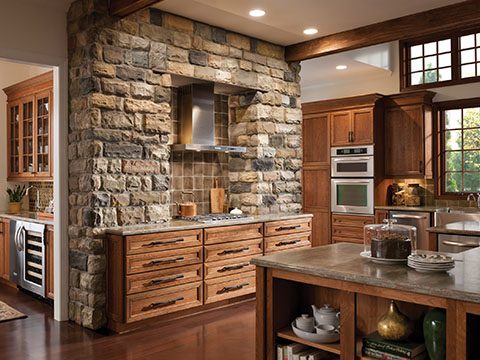
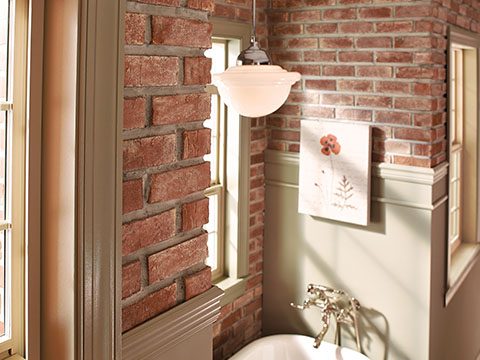
With proper preparation, Ply Gem Stone can be installed to almost any structurally sound surface. Ply Gem Stone has been installed indoors and outdoors in commercial and residential buildings of all sizes. Please review the Ply Gem Stone Installation Guide for detailed instructions.
Who can install Ply Gem Stone?
For best results, we recommend an installer who has a fundamental understanding of stone masonry. Experienced DIYers may install as well, but should be careful to research the process and follow our installation recommendations.
How does Ply Gem Stone hold up to freeze/thaw cycles?
Ply Gem Stone products are tested for freeze/thaw durability. For best results, we recommend that you follow suggested installation guidelines, including proper flashing and water diversion techniques.
How much does manufactured stone weigh?
Ply Gem Stone weighs approximately 10 to 12 pounds per square foot and is considered an adhered veneer.
Will Ply Gem Stone fade?
When Ply Gem Stone is manufactured, the color is blended throughout and becomes an integral part of the product. Permanent mineral oxide pigments are applied and absorbed when the veneer is cast. Thus, similar to natural stone, there are minimal noticeable color changes after years of weathering.
How important is installation?
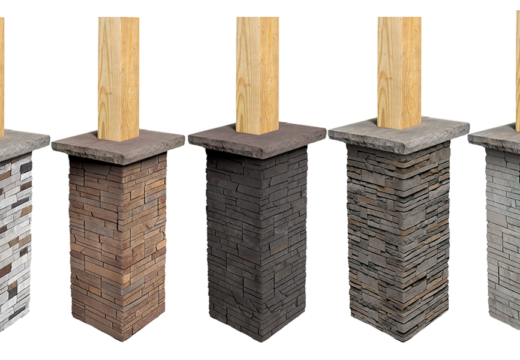
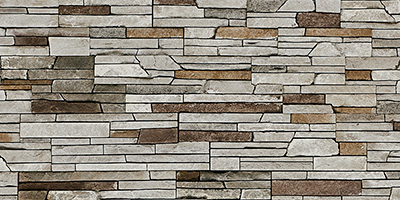
When incorporating stone veneer into your project, installation plays an important role in the final result. The process should begin with careful consideration of the profile and color selection as well as the stone pattern and the type of grout technique used. Before starting a project, we recommend creating a sample board to establish the look you desire.
Where can I purchase Ply Gem Stone?
For a location near you, call 877-804-1670 or visit our dealer locator.
How can I contact a professional mason?
Your area Ply Gem Stone distributor can recommend local masons who are familiar with our product lines and installation processes.
Can Ply Gem Stone be installed near water?
We do not recommend Ply Gem Stone for use below the water line in a pool, fountain, or below grade. When installed near water, we recommend applying a high-quality, penetrating, and breathable sealer that is either silane or siloxane-based.
What is the thickness of Ply Gem Stone?
Depending on the style, most stone types are 1-1/4 to 2 inches thick.
What is the R-Value of Ply Gem Stone?
The average R-Value of Ply Gem Stone is 0.41 per inch of thickness.
We recommend you clean Ply Gem Stone with a soft bristle brush to remove dirt or other debris. If a stronger cleaning agent is necessary, try a granulated mild detergent mixed with water or mix a solution of (no more than) one part white vinegar to five parts water. Rinse with clean water to remove any solution that might remain on the surface. DO NOT use wire brushes, acid cleaners, power washers, bleach, paint remover, or any other type of concrete cleaner.
Can Ply Gem Stone be sealed?
Sealing Ply Gem Stone is not required. However, a sealer will provide added protection and create a surface that is easier to clean. If you decide to seal your stone veneer, use only a silane or siloxane-based penetrating, breathable masonry sealer. Please note that you should test a small area beforehand because a sealer may affect stone color.
Are movement joints required for Ply Gem Stone?
Expansion joints usually pass completely through a wall. Control joints are often placed on the surface of the wall to relieve strain on the skin of the wall. Terminate the veneer installation where control and expansion joints occur in the substrate. Do not span these joints with veneer because this will lead to cracking. Expansion joints in a building must be specified by the architect or engineer. The architect or engineer should consider the ASTM C 1063 control joint requirements when determining the location of control joints on any structure. The weakest point on a wall is usually immediately above and below the penetrations.
How is Ply Gem Stone installed when there is an expansion joint?
Do not span movement joints with the veneer. You will need to treat each section as its own installation.
What is Ply Gem Stone’s recommendation for flashing around windows and doors?
To prevent leakage, install a firm and corrosion-resistant flashing at all penetrations and terminations of the veneer cladding. Also accommodate for proper drainage. Flashing type and locations must be in accordance with the requirements of the applicable code. Please refer to ASTM E 2112 or documentation from your window or door manufacturer.
Does Ply Gem Stone need a ledge detail at the bottom for structural support or can it hang freely.
Footings and support ledges are not required for structural security. Stone veneer is supported on the wall by the bond of the mortar to the stone and scratch coat.
Ply Gem Stone suggests using two separate layers of WRB in all applications where WRB is specified and one layer for interior applications. The WRB must meet the requirements of ICC-ES AC 38 Acceptance Criteria for Water-Resistive Barriers. When using Grade D paper, a 60-minute rating is recommended. Felt paper must be clearly marked indicating that it meets the requirements of ASTM D 226 for #15 or #30 asphalt saturated felt. We do not recommend using felt meeting ASTM D 4869 or non-ASTM #15 felt behind veneer. It is acceptable to use one layer of housewrap covered by a second layer of WRB, provided it meets the requirements above. Make sure your WRB is free of tears and holes.
Should a rainscreen drainage plane system be used?
Ply Gem Stone does not require the use of a rainscreen drainage plane system for all applications. However, some building code requirements call for drainage systems behind cladding materials such as manufactured veneer. Refer to applicable codes.
Can Ply Gem Stone be installed around a fireplace?
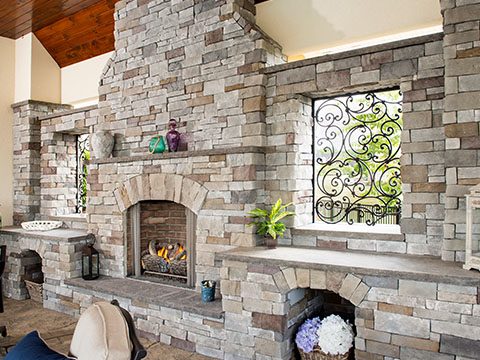
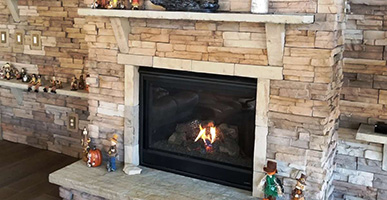
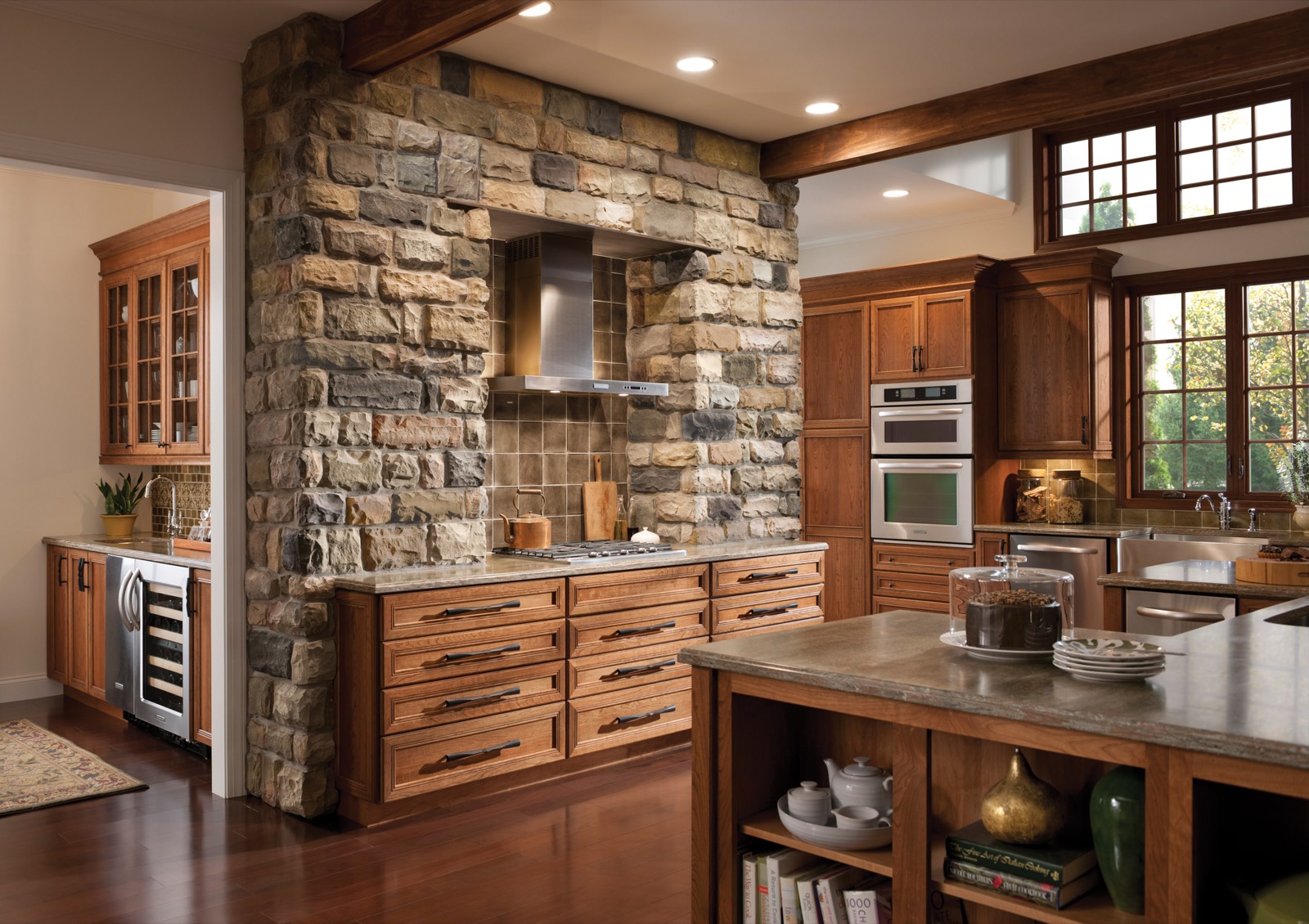
Ply Gem Stone is often incorporated into fireplace designs. This application has worked well both aesthetically and functionally. We suggest installing the veneer at least 18 inches from any open flame.
Should measures be taken for hot or cold weather installations?
Ply Gem Stone should be installed in temperatures of 40°F or higher. In environments below 40°F, we suggest heating the mortar between 40°F and 120°F (not to exceed 140°F). Do not use frozen mortar. Be careful to avoid freezing temperatures after Ply Gem Stone is installed. In some cases, you may want to cover and heat walls following installation to prevent freezing. See section2104.3 of the International Building Code (IBC) for additional cold weather requirements. Hot weather applications should follow the requirements in section 2104.4 of the IBC. Mortar should be kept under 120°F and be utilized within two hours of initial mixing.
What measures should be taken for Ply Gem Stone applications higher than 30 feet?
Before installing Ply Gem Stone in applications higher than 30 feet, it is a good idea to consult with a building code official. Ply Gem Stone can be installed on any surface, provided it is structurally sound. However, there is a 30-foot height limit for installations over wood-frame construction (unless special construction techniques accommodate differential movement approved by a code official). There is no height restriction for installations over non-wood-framed sheathing (such as steel studs, concrete walls, etc.). For all applications up to 30 feet, please refer to our Installation Guide.